

The core problem between Iran and the US today is neither a lack of negotiation channels nor the absence of mediators. The real issue is that elements of the US decision-making establishment continue to refuse to recognize Iran as an independent and powerful actor. A mindset of superiority continues to shape Washington's calculations—the belief that greater pressure will yield greater concessions or ultimately force Iran to back down.
The recent calm before the storm
For some time, certain security analysts argued that the relative calm prevailing after the signing of the recent agreement was not so much a sign of a genuine shift in Washington's military strategy as it was a tactical pause. This pause could yield to renewed confrontation with Iran following the conclusion of the FIFA World Cup and the easing of political and media constraints. In their view, the current phase of low-intensity warfare and the recent series of US military and security actions may serve as the prelude to a broader scenario—one now discussed with growing urgency in strategic circles as regional tensions continue to escalate.
Mistrust and security calculations
Regardless of how accurate this assessment proves to be, one fact remains indisputable: the ceasefire intended to signal the beginning of de-escalation proved short-lived. The understanding, reached only after considerable effort, quickly unravelled under the weight of mistrust, security calculations, and what Iran views as provocative US actions. Today, not only has the prospect of peace faded, but even the viability of the ceasefire agreement has become uncertain, with the region moving once again toward an escalation of confrontation.
The key question is why
Why did an agreement that could have opened the door to managing tensions and disputes weaken so rapidly—or, in the words of President Trump, become "meaningless"? A superficial answer would point to alleged violations of individual provisions or a series of developments on the ground. A more fundamental explanation lies elsewhere. The root of the crisis is Washington's flawed perception of Iran's position within today's regional and global security order.
The 40-year plan did not work
For more than four decades, a large portion of US policy has rested on the assumption that a combination of economic pressure, political isolation, military threats, and the building of regional coalitions could eventually alter Iran's behavior and minimize its role in Western Asia's strategic balance. The tools have evolved—ranging from sweeping sanctions and the "maximum pressure" campaign to military deterrence, cyber operations, intelligence activities, and new regional security alliances. Yet all these policies have relied on the same underlying premise: that Iran can ultimately be contained, exhausted, or even removed from the region's strategic equation.
Direct US confrontation with Iran… changed the landscape
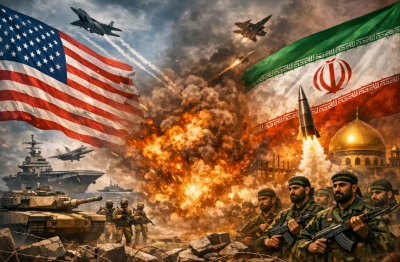
Recent developments, particularly direct confrontations, have severely challenged this assumption. Even many Western observers now acknowledge that Iran has diversified and strengthened its deterrent capabilities, maintained and in certain areas enhanced its capacity to respond, and preserved a significant degree of resilience despite continuous maximum pressure. This reality has ensured that military action against Iran will not go unanswered, inflicting substantial costs on the opposing side despite many initial expectations.
The conditions for a real truce
This is a strategic reality. A truce can hold only when both sides recognize each other's power, independence, and resolve. Lasting peace is possible only when both accept that eliminating or ignoring the other is neither feasible nor cost-free. This is why the main obstacle today is not a lack of communication channels or mediators. Rather, segments of the US decision-making establishment still do not acknowledge Iran as an independent, enduring, and powerful actor. A mindset of superiority continues to dominate parts of Washington's strategic thinking—the belief that heightened pressure can extract additional concessions or eventually force Iran into a strategic retreat.
Experience shows the opposite...
Iran may, at different times, negotiate methods for dispute management or the framework of agreements. However, regarding its strategic independence, national rights, and regional role, it is unwilling to accept externally imposed formulas. This reality has caused every agreement built on altering the balance of power, rather than recognizing it, to collapse at its first major security test. From this perspective, the recent understanding that has largely lost its effectiveness fell victim not so much to an isolated incident as to a fundamental miscalculation: the belief that a viable agreement could be achieved solely through pressure, without recognizing Iran's true position.
History teaches
The history of international relations shows that many prolonged rivalries were contained only after the parties recognized each other's power before developing mutual trust. Lasting peace is not the product of optimism, but of realism. The first step is accepting that the other side exists, holds influence, and cannot be eliminated. Only then can negotiations over the rules of coexistence begin. Unless such a shift occurs in Washington's strategic mindset, every truce will merely provide an opportunity for military regrouping, and every agreement will become little more than a brief pause between crises. Under these conditions, even in the absence of open war, the region will remain trapped in a state of "neither war nor peace"—a condition that steadily erodes the regional security and development of all parties.
Ultimately, the core issue today is neither the drafting of a new agreement nor the number of diplomatic meetings. The real question lies elsewhere: Is the US prepared to recognize the reality of an independent, capable, and influential Iran in the regional and global security landscape? Until the answer is yes, neither lasting peace nor a durable truce will emerge, and the cycle of escalation will persist. The first step to breaking this cycle is not redrawing the region's map, but changing how realities are understood—a reality called Iran.
www.bankingnews.gr






Σχόλια αναγνωστών